


Healthcare App Development Services

Patients expect to manage their health from a phone. Clinicians want lab results, schedules, and patient history in one tap – not buried in a desktop system they have to log into from a workstation. Healthcare app development is where that gap closes: the right data, the right person, the right moment – on the device they already have in their hand.

Dotcode builds custom healthcare app development solutions for hospitals, clinics, telehealth startups, pharma companies, and medical device manufacturers. From a focused patient-facing MVP to a full clinical platform across iOS and Android – we build for how medicine actually works, not for how a generic template assumes it does.

Why Healthcare Organizations Invest in Custom Apps

Generic apps force clinical workarounds

Off-the-shelf health apps are built for a broad market. They cover the average case. Your workflows, your patient population, and your compliance requirements are not average – and when the app does not fit, staff build workarounds. Workarounds compound quietly until they become a patient safety issue or a compliance audit finding.

Data stays in silos
Data stays in silos

A clinician checking a patient on a mobile device should see the same data as the desktop EHR – updated in real time, not an export from last night. Most off-the-shelf apps cannot do bi-directional sync with your EHR. Custom healthcare application development solves this at the architecture level, not with a manual export workflow.

HIPAA compliance is not a mobile feature

PHI on a mobile device requires encryption at rest, secure transmission, session management, remote wipe capability, and audit logging. These are architecture decisions that have to be made before the first screen is designed. Apps that treat compliance as an afterthought create liability that does not surface until an audit.

Low adoption because the UX was built for a demo

A healthcare app that clinical staff do not use is not a product – it is a cost. UX decisions made for someone with six seconds of attention in a high-pressure environment are different from decisions made for a conference room presentation. We test with real clinical users before a line of code is written.

What we build

Healthcare App Development Solutions

As a healthcare app development company, we do not apply one architecture across every engagement. Each product type below has its own compliance profile, UX requirements, and integration complexity. We bring direct experience from prior builds in each category.

01
Patient Mobile App

Appointment booking, lab results, secure messaging with the care team, medication reminders, and telehealth access – all in one patient-facing iOS and Android app. The goal is adoption: a patient app that gets used reduces call center volume, improves adherence, and gives your care team a real communication channel. Healthcare mobile app development for patient-facing products means the UX has to work for someone who is anxious, not technical, and opening the app at a difficult moment.

Built for Patient Adoption
02
Doctor and Clinician App

Point-of-care access to patient records, clinical decision support, e-prescribing, and real-time alerts – on the device the clinician already carries. No desktop login required. Healthcare mobile app development for clinical staff is a different design problem than consumer products: information density matters, one-handed use matters, and speed matters more than aesthetics.

Designed for Faster Decisions
03
Hospital App

Wayfinding, pre-admission forms, discharge instructions, post-visit follow-up, and patient communication – one app that serves the full patient journey from arrival to recovery. Hospital app development means coordinating across departments with different workflows and different data systems. We map that complexity during discovery so it does not surface as a production problem after launch.

Seamless Patient Experience
04
Telemedicine App

Video consultations, async messaging, remote monitoring integration, and reimbursement-ready visit workflows – built for iOS and Android from day one. Reimbursement workflows and visit documentation are included at launch, not added when billing problems surface. Built on HIPAA-compliant infrastructure with low-latency video that works on the networks real patients actually use.

Built for Virtual Care
05
Mental Health App

Mood tracking, journaling, therapist messaging, crisis resources, and CBT-based tools – built with the sensitivity that mental health app development requires. The UX decisions in a mental health product carry more weight than in most other categories: tone, notification timing, session flow, and data privacy all affect whether a user trusts the product enough to use it when they actually need it. We treat this as a core design constraint, not a disclaimer added before launch.

Supporting Mental Wellness
06
Medical App for Devices and Wearables

Companion apps for medical devices, wearable data platforms, and clinician-facing dashboards that meet FDA Software as a Medical Device requirements where applicable. Real-time data pipelines from device to clinical interface, with the reliability that device data demands. Medical app development services in this category require a higher compliance bar than standard HIPAA – we build for it from day one.

Compliance Beyond HIPAA

Who We Work With

Hospitals and Health Systems

Multi-site environments with complex integration requirements and strict compliance obligations. We build apps that connect to the systems already in place – not ones that require replacing the EHR first.

Clinics and Medical Practices

Patient communication, scheduling, and records access that fits how a practice actually runs. We have worked with single-specialty and multi-specialty practices where the main problem was administrative load on clinical staff.

Telehealth and Digital Health Startups

From pre-seed to Series B. Healthcare mobile app development services for startups focus on a HIPAA-compliant MVP that moves fast without building technical debt that becomes a compliance problem at the next funding round. We scope honestly – what has to be compliant from day one and what can follow.

Payers and Insurance

Member-facing apps, prior authorization tools, and care management platforms. Payer apps have a compliance profile distinct from provider apps – authorization workflows and eligibility verification are areas where generic tools consistently underperform.

Pharma and Life Sciences

Clinical trial companion apps, patient registry tools, and real-world evidence platforms. Data integrity and audit trail requirements in pharma go beyond standard HIPAA. Healthcare application development in this space means building for that higher bar from the beginning.

Medical Device Manufacturers

Companion apps and device data platforms built to FDA SaMD requirements. IoT pipelines from device to clinical interface, with the uptime and reliability that device-connected data demands.

Custom Healthcare App vs Off-the-Shelf

Fits your clinical workflow
Generic off-the-shelf

Partially – teams adapt to product limits

Custom by Dotcode

Yes – architecture maps to your workflows from discovery

Native iOS and Android
Generic off-the-shelf

Often web-wrapped or one platform only

Custom by Dotcode

Native or cross-platform based on your requirements

EHR integration
Generic off-the-shelf

Limited to vendor connectors

Custom by Dotcode

FHIR R4, SMART on FHIR, HL7 v2/v3

HIPAA / GDPR compliance
Generic off-the-shelf

Vendor-managed scope; your config layer is your responsibility

Custom by Dotcode

Built into architecture and data model from day one

App Store compliance
Generic off-the-shelf

You manage it

Custom by Dotcode

Included – submission, review, and post-launch updates

Offline mode
Generic off-the-shelf

Rarely supported

Custom by Dotcode

Designed in from the start where clinical workflows require it

Code and data ownership
Generic off-the-shelf

Vendor-owned

Custom by Dotcode

100% yours from day one

Change speed
Generic off-the-shelf

Dependent on vendor roadmap

Custom by Dotcode

Deploys on your timeline

Running a patient experience on a generic app that was not built for your workflow?

Let's talk.

Book a call →

Development Process

Every healthcare mobile app development engagement follows six stages. The order is fixed – each stage is a prerequisite for the next. This is not process for its own sake. It is how healthcare apps avoid the compliance gaps and clinical workflow mismatches that surface after go-live.

Get a project estimate →

1

Discovery and Requirements

Clinical process mapping, existing system inventory, compliance requirements, and patient population analysis. Data model, integration scope, and App Store compliance requirements are all locked before development starts. Scope creep in a healthcare product is not just a budget problem – it is a compliance risk.

2

UX/UI Design

Wireframes and clickable prototypes tested with real clinical users and patients before code is written. We design for the person under pressure on a small screen, not for the demo. Mobile healthcare UX has constraints that general UX principles do not cover: one-handed use, notification behavior, session timeout, and accessibility all affect adoption in clinical environments.

3

Architecture and Tech Stack

Stack selected against compliance requirements, data volume, integration complexity, and platform – iOS, Android, or cross-platform. HIPAA-eligible cloud infrastructure, FHIR compliance, encryption architecture, and offline data handling are part of the data model design – not retrofitted after QA reveals gaps.

4

Agile Development

Two-week sprints with a demo after each one. Clinical stakeholders review every iteration. The point is catching clinical workflow mismatches while they are cheap to fix – not after go-live when they require a hotfix and a staff retraining cycle.

5

QA and Compliance Testing

Functional, security, and penetration testing – with depth on modules that handle PHI. App Store submission testing on real devices. Compliance documentation is a deliverable included as standard, not produced retrospectively when an audit request arrives.

6

Launch and Post-Launch Support

App Store submission, deployment, clinical staff training, and iteration on real production data. The first 90 days of a healthcare app launch surface usage patterns that no UAT captures – edge cases from actual clinical workflows, performance under real patient volume, and integration behavior under production data quality.

Tech Stack for Custom Software Development

The stack for any healthcare app development engagement is chosen during the architecture phase – not defaulted from a template.

Looking for a specific tech stack?

Discuss Your Project with Us

Nazar Solovei
Nazar Solovei Business Development Manager
Let’s talk
Mobile
Mobile

React Native, Flutter, Swift, Kotlin

Frontend
Frontend

React, Next.js, Vue.js, Angular

Backend
Backend

Node.js, Python, Java, .NET, Ruby on Rails

Cloud
Cloud

AWS (HIPAA-eligible), Google Cloud, Azure Healthcare APIs

EHR / HL7 / FHIR
EHR / HL7 / FHIR

Epic SMART on FHIR, Cerner FHIR R4, Allscripts, Athenahealth, Custom HL7 v2/v3

Telemedicine
Telemedicine

Twilio, Daily.co, Agora, AWS Chime

Databases
Databases

PostgreSQL, MongoDB, Redis, MySQL

Compliance & Security

AWS HIPAA, HashiCorp Vault, OAuth 2.0, TLS 1.3, Aptible

Looking for a specific tech stack?

Discuss Your Project with Us

Nazar Solovei
Nazar Solovei Business Development Manager
Featured Cases

Custom Software Solutions

All cases

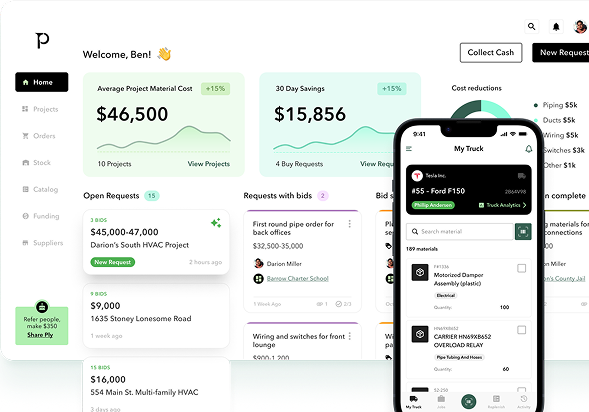
Ply

Managing and buying materials

Ply streamlines material procurement for MEP contractors with cost savings, payments, and supplier requests. Integrated with third-party fintech APIs like Plaid, Railz, Lendflow, and Stripe.

Fintech MVP Development Mobile Web SaaS MVP Development
Featured Cases
line on background

Why Businesses Choose Dotcode

Need software that works exactly how your business needs?

Let’s build it together!

Let’s talk
Built around your workflow, not a pre-built framework.
Our process starts with your clinical workflows and your compliance requirements. The architecture follows from that - not from a shortcut someone else made.
Compliance is architecture, not a checkbox.
HIPAA, GDPR, and HL7/FHIR compliance built into the data model from day one. Not added before an audit. Every sprint includes compliance validation on modules that handle PHI.
Post-payment model.
Post-payment model.
No large upfront payment before you have seen working software. You pay for delivered, tested functionality.
 Full code and data ownership from day one.
Full code and data ownership from day one.
No vendor lock-in. No licensing dependency. The full source code and all data are yours from the first commit.
One team, full cycle.
Discovery, UX design, development, QA, compliance review, App Store submission, and post-launch support - one team with continuous context. No handoffs between agencies. No context lost between design and development.

Frequently Asked Questions

Healthcare app development services cover the full product lifecycle: requirements discovery, UX design with clinical users and patients, HIPAA/GDPR-compliant architecture, iOS and Android development, EHR integrations, QA and penetration testing, App Store submission, compliance documentation, and post-launch support. The scope depends on the product type – a patient portal app has different components than a clinical decision support tool or a mental health app.

Custom healthcare app development means the architecture, data model, integrations, and UX are designed for your specific workflows and patient population. Off-the-shelf products approximate a median workflow – the gaps become workarounds. As a healthcare application development company, Dotcode starts from discovery of your actual clinical processes, not from a template. The result is a product your staff and patients actually use.

Yes. Telehealth and digital health startups are one of our primary segments. Healthcare mobile app development for startups focuses on a HIPAA-compliant MVP at a reasonable cost – without building technical debt that becomes a compliance problem at Series A. We scope honestly: what needs to be compliant from day one and what can follow.

It depends on your user base and timeline. If your patients or clinicians are predominantly on one platform, native gives the best performance and UX. If you need both platforms quickly, React Native or Flutter lets us build once and deploy to both – with near-native performance for most healthcare use cases. We make this recommendation during discovery based on your actual requirements, not a default preference.

Healthcare mobile app development services at Dotcode treat HIPAA and GDPR compliance as architectural requirements, not a checklist. HIPAA-eligible AWS infrastructure, encryption at rest and in transit, role-based access control, session management, audit logging, and BAA agreements are standard. For EU deployments, GDPR data residency and processing requirements are mapped during architecture design.

Timelines vary by product type and complexity. A HIPAA-compliant MVP – patient portal, basic telemedicine app, or EHR-integrated scheduling app – typically takes 3 to 5 months from discovery to App Store launch. A full clinical platform or enterprise hospital app runs 9 to 18 months. The discovery phase produces a realistic timeline before any development commitment.

PHI security in medical app development services covers the full development lifecycle. Access to production data is restricted to named engineers under signed BAA agreements. Development and staging environments use synthetic or de-identified data. On-device encryption, secure storage, session timeout, and remote wipe capability are reviewed during the architecture phase – not added before launch.

Yes. App Store and Google Play submission is included in our healthcare mobile application development process. Health and medical apps have specific review requirements – particularly around privacy disclosures, data handling, and HIPAA-related claims in marketing copy. We prepare the submission, manage the review process, and handle any follow-up requests from Apple or Google.

Ready to build a healthcare app your team and patients will actually use?

Talk to a Dotcode engineer about your project.
A direct conversation about your workflows, your compliance requirements, and
what it actually takes to build for healthcare.