


Accounting Software Integration Services

Connect Any System to Your Accounting Platform

There’s a version of month-end close that doesn’t involve anyone re-entering the same invoice in three different places. Data moves automatically from your operational systems into your accounting platform – invoices, payments, customers, orders – without a person in the middle touching each record. That’s what proper accounting software integration services actually deliver. Our accounting system integration work connects whatever you’re running – ERP, CRM, POS, ecommerce platform, custom SaaS – to Xero, QuickBooks, Sage, NetSuite, or wherever your books live. Real-time sync, error-free financials, no monthly closing chaos.

Why manual accounting sync breaks businesses

Double data entry
Double data entry

Your team re-enters invoices, orders, and payments across systems manually. Every re-entry is a potential error and a wasted hour. At low volume it’s annoying. At scale it becomes a full-time job that produces unreliable data. Accounting software integration services exist specifically to remove this loop.

Delayed financial visibility

Reports are always behind because data moves slowly between platforms. Decisions get made on numbers that are a week old, sometimes more. The closer you are to a cash-flow decision, the more that lag costs.

Reconciliation chaos

Month-end close takes days because nothing matches automatically between the operational system and the accounting platform. Someone has to chase down every discrepancy by hand. Financial software integration turns reconciliation into a background process rather than a monthly event that derails the finance team.

Scaling bottlenecks
Scaling bottlenecks

What works for 50 transactions a day falls apart at 500. Manual workflows don’t scale – not because people aren’t trying, but because the volume eventually exceeds what manual processes can reliably handle. A proper integration doesn’t slow down when volume grows.

Platforms we integrate with

We also build accounting API integration for:
FreshBooks
Zoho Books
Wave
MYOB
Exact Online
Microsoft Dynamics 365 Business Central
SAP Business One
custom or legacy accounting systems
1
Xero

Bi-directional sync of invoices, payments, contacts, and tax codes through the Xero API. Our Xero integration services cover the full data model – line items, tax treatments, payment allocations – not just the headline objects. Xero accounting integration works well for SaaS businesses, agencies, and service companies that live in Xero and need their operational platform to feed it automatically.

2
QuickBooks Online (QBO)

REST API plus Webhooks for real-time sync of invoices, payments, customers, vendors, and tax codes. QuickBooks integration services at Dotcode go beyond the standard objects – we handle the edge cases that generic integrations miss, like partial payments, voided transactions, and multi-currency setups. QuickBooks Online integration is one of the most common builds we do, and QBO’s API has specific quirks around rate limits and pagination that we know well.

3
Sage

Sage comes in several versions – Sage 50, Sage 200, Sage Intacct, Sage Business Cloud – and the integration approach differs between them. Cloud versions use Sage Business Cloud API. Legacy versions (Sage 50, Sage 200) typically require ODBC or file-based approaches. Our Sage integration services cover all variants, including file-based connectors for on-premise deployments that have no public API. Sage software integration for Intacct involves the SageSuites REST API and is particularly common in distribution and manufacturing clients who need subledger detail pushed across.

4
NetSuite

SuiteTalk REST and SOAP APIs for complex ERP integrations. NetSuite accounting integration typically involves more sophisticated mapping logic, custom record types, multi-subsidiary environments, and consolidated reporting structures. We also handle the authentication complexity that comes with NetSuite’s token-based auth model. Saved searches and custom fields are mapped during discovery, so the integration reflects how the client actually uses NetSuite rather than its default data structure.

What we sync

The scope of accounting data integration goes beyond just invoices. Here’s what we typically connect:

1

Invoices & Bills

Automatic transfer from your system to the accounting platform with all line items and tax treatments intact.

2

Payments & Receipts

Real-time sync of payment confirmations and partial payments.

3

Customers & Vendors

Bi-directional contact sync without duplicates building up over time.

4

Products & Services

SKU and service item mapping between platforms.

5

Sales Orders & Purchase Orders

Order transfer and status updates in the accounting system.

6

Tax Codes & Chart of Accounts

Proper account mapping between platforms so nothing lands in the wrong bucket.

7

Bank Transactions & Reconciliation

Automatic transaction loading for bank reconciliation.

8

Inventory & Stock Levels

Sync between warehouse or POS and the accounting platform.

Who we build accounting integrations for

01
SaaS & Software Companies

Building accounting integration directly into a SaaS product turns it into a competitive differentiator. Customers who can connect their existing accounting platform without leaving your product have less reason to leave. Our accounting software integration development for SaaS companies is designed to be embedded – the integration becomes part of your product, not a separate tool.

Embedded Native Sync
02
E-commerce Businesses

Shopify, WooCommerce, and Magento orders, payments, and returns flowing automatically into Xero, QBO, or Sage – without a daily export-import routine. Our accounting integration services for ecommerce clients handle multi-currency transactions, refund flows, and marketplace fee reconciliation, which are the objects that generic integrations tend to get wrong.

Zero Manual Export
03
Retail & POS Systems

Daily sales totals, cash flows, and inventory sync between POS and accounting platform. The goal is that by the time the finance team opens the books in the morning, the previous day’s transactions are already there.

Instant Books Sync
04
Startups Building Fintech or B2B Platforms

[3:37 PM]Two to four weeks to a working MVP integration with core data objects syncing on real data. Accounting system integration at this stage is about proving the connection works before committing to the full build – which is exactly how our MVP-first process is structured.

2-4 Week MVP
05
Service Businesses & Agencies

Automatic invoice generation from time-tracking or project management tools, billing sync, payment confirmation fed back into the operational system. Financial software integration for agencies typically centres on removing the gap between ‘project delivered’ and ‘invoice sent’ – that gap is almost always a manual step that integration eliminates.

Automated Invoicing
06
Manufacturing & Distribution

ERP to accounting platform sync for purchase orders, production costs, inventory movements, and supplier invoices. ERP accounting integration for manufacturers involves more complex data transformations – cost allocations, multi-site inventory, and compliance documentation – than a standard ecommerce integration. See our Food & Beverage industry work for F&B distribution context.

Complex ERP Logic

Our MVP-first integration approach

Phase 1 — MVP (2–4 weeks) icon
Phase 1 — MVP (2–4 weeks)

Core data objects. Real sync. Tested on your data.

  • Identify the 2–3 data objects that deliver 80% of the value (typically: invoices + payments + customers)
  • Identify the 2–3 data objects that deliver 80% of the value (typically: invoices + payments + customers)
  • Basic error handling and retry logic built in
  • Real testing on your sandbox data before go-live
Phase 2 — Scale (after validation icon
Phase 2 — Scale (after validation

Full sync. Real-time. Production-grade.

  • Expand to all data objects based on real usage patterns
  • Real-time webhooks replace batch sync where needed
  • Advanced mapping rules, multi-currency, multi-entity
  • Monitoring dashboard, alerting, auto-retry, audit log

Integration architecture types

Direct API Integration

Direct connection to the REST API of the target platform - Xero API, QBO API, Sage Business Cloud API. Fastest option for cloud-based accounting platforms. Our accounting API integration work here involves handling rate limits, pagination, webhook registration, and the versioning differences between API releases - which all three major platforms handle differently.

Middleware / iPaaS
Middleware / iPaaS

Integration through a middleware layer - Zapier, Make, Boomi, or a custom-built connector service. The right choice when you need complex data transformations between systems, or when the mapping logic is conditional enough that a direct API connection would become unmaintainable.

Webhook-Driven
Webhook-Driven

Real-time sync through webhooks: an event in the source system triggers an immediate push to the accounting platform. No polling, no batch delay. Works well when financial data needs to be current - payments especially, where lag between confirmation and accounting entry creates reconciliation issues.

File-Based / SFTP
File-Based / SFTP

For legacy systems without an API: scheduled CSV or XML exchange over SFTP with automated parsing and validation. Sage software integration for on-premise Sage 50 and Sage 200 installations typically uses this approach. Financial software integration for any legacy accounting system without a REST API falls into this category.

line on background
square on background

How we build it

Our accounting software integration development process has six steps. The sequence is deliberate – each step has a specific output that the next step depends on.

Get in touch and let's talk
1
Discovery & Mapping

We analyse your existing systems, the data objects that need to move, transaction volumes, sync direction requirements, and the business rules that govern how data maps between platforms. This is where we find the edge cases – the payment types, the tax treatments, the multi-currency scenarios – that will cause problems if they’re not accounted for in the design.

2
MVP Scope Definition

We define the minimum set of objects and sync directions for the first release. Not everything – the 20% of scope that delivers 80% of the value. This is the working integration you’ll be able to validate on real data before we build the rest.

3
API Research & Auth Setup

Detailed review of the target accounting API documentation, OAuth2 or API key authentication setup, and test connection verification. Accounting system integration work starts here – authentication failures and rate limit surprises discovered during development add weeks to timelines.

4
Integration Development

Building the connector, mapping logic, error handling, and retry mechanism. We write integration code as a service – not as a script – which means it has proper logging, state management, and failure recovery from the start.

5
Testing on Real Data

Testing against real transaction volumes in the accounting platform’s sandbox. Not unit tests – actual end-to-end flows using the data structures your systems produce. Edge cases get surfaced here, not after go-live.

6
Deployment & Monitoring

Production rollout, alerting configuration, and a monitoring dashboard that shows sync queue status, error rates, and last successful run times. After launch, we stay available – not as a ticket queue, but as the team that built the system and knows where the failure points are. For broader custom software development context, see our services overview.

Tech Stack for Custom Software Development

Stack choices for accounting API integration projects depend on what you're already running - we match the backend language to your existing infrastructure where possible.

Looking for a specific tech stack?

Discuss Your Project with Us

Nazar Solovei
Nazar Solovei Business Development Manager
Let’s talk
Backend
Backend

Node.js, Java, PHP, Ruby on Rails

APIs
APIs

Xero API, QuickBooks Online REST API, Sage Business Cloud API, Sage Intacct API, NetSuite SuiteTalk, FreshBooks API, Zoho Books API

Auth
Auth

OAuth 2.0, API Keys, HMAC webhooks

Queues & Async
Queues & Async

Bull/BullMQ, Sidekiq, Celery, AWS SQS

Storage
Storage

PostgreSQL, MongoDB, Redis (queue + cache)

Monitoring
Monitoring

Sentry, Datadog, custom webhook dashboards

File-based (legacy)
File-based (legacy)

SFTP, CSV/XML parsers, scheduled jobs

Cloud
Cloud

AWS, Google Cloud, Azure

Looking for a specific tech stack?

Discuss Your Project with Us

Nazar Solovei
Nazar Solovei Business Development Manager
Featured Cases

Custom Software Solutions

All cases

Ply

Managing and buying materials

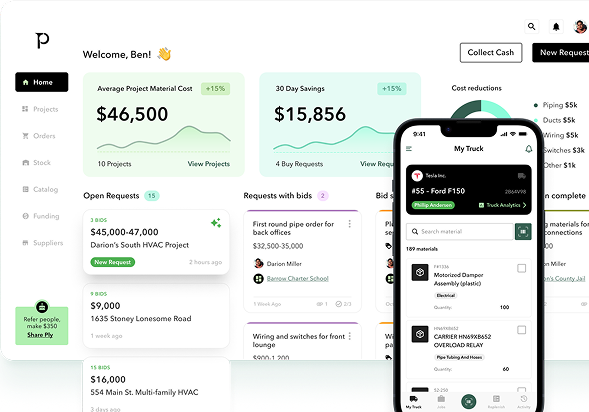
Ply streamlines material procurement for MEP contractors with cost savings, payments, and supplier requests. Integrated with third-party fintech APIs like Plaid, Railz, Lendflow, and Stripe.

Fintech MVP Development Mobile Web SaaS MVP Development
Featured Cases

Still copying invoices between systems by hand?
Let's fix that in 2 weeks

Tell us what you're running and what it needs to connect to. One call is usually enough to scope the MVP.

Get consulting

Why Dotcode

MVP-first approach
MVP-first approach

First working integration in 2–4 weeks. You pay after each confirmed milestone, not upfront for a plan. Our accounting software integration services are structured around delivering working software fast, then expanding scope after validation – not selling a large project and delivering it six months later.

Multi-platform expertise

We know Xero, QBO, Sage, and NetSuite APIs from the inside – their rate limits, their quirks, their versioning behaviour, their pagination patterns. Our Sage integration services and accounting integration services teams have worked through the undocumented edge cases so you don’t have to discover them in production.

Post-milestone payment model

Payment after each confirmed milestone – not a large upfront commitment before you’ve seen the integration working. The MVP phase is typically one milestone: working sync on core objects, tested on real data.

100% code ownership
100% code ownership

The connector, the mapping logic, the monitoring setup – all yours from the first sprint. No SaaS dependency on the integration layer itself, no ongoing licensing cost for the connector.

Full-cycle delivery
Full-cycle delivery

Discovery through post-launch monitoring and support. See our custom software development and MVP Development pages for more on how we approach both the build and the process. Our accounting software integration development work is part of the same delivery model as every other project we run.

Frequently Asked Questions

An MVP covering core data objects – invoices, payments, customers – typically takes 2–4 weeks. Full bi-directional accounting software integration development covering all objects and sync directions runs 6–10 weeks, depending on the number of platforms and the complexity of the mapping logic. We always recommend starting with the MVP to validate the connection before expanding scope.

Xero, QuickBooks Online, Sage (50, 200, Intacct, Business Cloud), NetSuite, FreshBooks, Zoho Books, MYOB, Wave, and custom or legacy ERP systems. Our accounting software integration services also cover Microsoft Dynamics 365 Business Central, SAP Business One, and Exact Online. If your platform isn’t on the list, we’ll review its API documentation and give you an honest assessment of what integration will take.

Yes, regardless of stack. We build a custom connector to any accounting API – REST or SOAP. Our accounting API integration approach treats the target accounting platform as an external service and builds around its API contracts, not around assumptions about what your source system looks like. Accounting system integrationv with a custom-built source system is actually simpler in some ways – we’re not working around the constraints of a third-party platform on both sides.

Our accounting data integration scope typically covers: invoices, bills, payments, receipts, customers, vendors, products and services, sales orders, purchase orders, tax codes, chart of accounts mapping, bank transactions, and inventory levels. Accounting integration services at Dotcode include the full data model – not just the headline objects that generic integrations cover.

Both. For cloud platforms – Xero, QBO, Sage Intacct – we build real-time sync via webhooks, which means events in your system trigger immediate updates in the accounting platform. For legacy systems without webhook support, or for high-volume scenarios where batching is more efficient, we build scheduled batch sync with configurable frequency. The choice depends on your transaction volume and how current the accounting data needs to be.

That’s exactly how our process works. The first 2–4 weeks produce a working integration on core data objects, tested on real data in the accounting platform’s sandbox. After you’ve validated it, we expand scope. Our accounting software integration services are structured this way deliberately – it removes the risk of building the wrong thing at full scale.

We build with versioning support, automated retry logic, and a monitoring dashboard that surfaces errors in real time – not in a daily email that arrives after someone’s already noticed the problem. Financial software integration built properly includes alerting that catches sync failures before they become data discrepancies. Post-launch support is part of standard delivery – when an API version is deprecated, we handle the migration.

Stop re-entering financial data between systems.
Build a working accounting integration in 2 weeks.

Tell us what you’re running and what it needs to talk to. Contact us, book a call, or estimate your project to get a scoped timeline and fixed cost before committing to anything.