


EMR Integration
Services

Most healthcare software problems that look like technology problems are actually data problems: the right information isn’t in the right system at the right moment. EMR integration services fix that at the source. We build bi-directional connections between electronic medical record systems and every application that depends on clinical data – patient portals, telehealth platforms, billing systems, RPM tools – so information flows in real time without a clinician bridging the gap manually. If you’re evaluating custom software development options for a healthcare integration project, this page covers exactly what we build and how.

Every electronic medical record integration engagement starts with a system audit – not with a pre-built connector. We build around your actual EMR configuration, version, and clinical workflow, not around what the middleware vendor decided was a reasonable default.

Why EMR integration is hard to get right

Getting EMR integration wrong is expensive in ways that show up immediately - and in ways that show up six months later during an audit. These are the four failure modes we see most often.
Manual data re-entry between systems

Clinical staff copy-paste patient data between EMR, billing systems, scheduling tools, and patient portals. Every manual step is a delay, an error risk, and a compliance liability. In high-volume environments, this burns hours per day across multiple roles.

EMR APIs are not plug-and-play

Epic, Cerner, and legacy systems each have different API models, authentication flows, data formats, and versioning cycles. EMR software integration that works in a sandbox environment breaks in production when the API version updates or the data model configuration differs from what was tested.

Compliance at every layer

Every connection that touches PHI requires HIPAA controls, audit logging, and BAA coverage. A single gap in the integration layer – an unencrypted message queue, a missing audit log, an uncovered data flow – is a compliance liability that the middleware vendor’s BAA won’t protect you from.

Generic middleware doesn't fit

iPaaS connectors work for average use cases, not for your specific EMR version, clinical workflow, or data model configuration. You end up mapping your data to what the connector supports instead of getting the integration your workflow actually requires.

Services We Provide

EMR integration services we provide

The EMR integration services below cover the full technical range – from FHIR R4 REST API development to legacy HL7 v2 interface engine work for systems that predate modern APIs. Scope is defined in discovery based on what your environment actually requires. For a broader view of our software development services, see the services overview.

Bi-directional EMR Data Sync

Bi-directional EMR Data Sync

Patient demographics, clinical notes, lab results, medications, and care plans synchronized between EMR and connected applications in real time. Zero manual re-entry between systems.
Every sync event is logged, auditable, and HIPAA-controlled. This is the core of EMR software integration at scale.

SMART on FHIR App Development

SMART on FHIR App Development

Applications that launch inside Epic, Cerner, and other FHIR-enabled EMRs – contextual, single sign-on, operating on live patient data without the clinician leaving their current workflow. We handle the App Orchard and Cerner App Market certification process as part of the engagement.

HL7 Interface Engine Development

HL7 Interface Engine Development

Custom interface engines for HL7 v2 message routing – ADT, ORM, ORU, SIU – between systems that predate FHIR. Built for the message volume and reliability that hospital operations require. Mirth Connect, Rhapsody, and custom Node.js/Python engines depending on the environment.

FHIR API Integration

FHIR API Integration

FHIR R4 REST API development and integration – including FHIR resource mapping, OAuth 2.0 authorization, and conformance testing against the target EMR’s implementation guide. Covers both inbound and outbound FHIR data flows across the integration layer.

Patient Identity Matching (MPI)

Patient Identity Matching (MPI)

Master Patient Index logic that resolves duplicate records and matches patients across disconnected systems – eliminating the most common source of clinical data quality problems in multi-system environments. Critical for any healthcare EMR integration spanning multiple facilities.

EMR Integration Audit & Modernization

EMR Integration Audit & Modernization

Audit of an existing integration layer – bottlenecks, error rates, data quality gaps, compliance gaps – followed by refactoring or full migration to a FHIR-based architecture. For organisations that built on HL7 v2 five years ago and need to modernise without a full rebuild.

EMR integration solution types

The right EMR integration solution depends on what systems you’re connecting and what data needs to flow where. Here are the six most common integration scenarios we handle.

01
Hospital EMR Integration

Multi-department, multi-location environments where clinical data needs to move reliably between EMR, lab systems, pharmacy, radiology, and ancillary systems. Typically requires HL7 interface engine work alongside FHIR API integration. EMR system integration at this scale is what we build for.

Cross-System Data Flow
02
Telehealth & EMR Integration

Referral data flowing in from the EMR, telehealth visit documentation flowing back out – without clinical staff bridging the gap manually. Bi-directional sync, post-visit note automation, and diagnosis coding support all handled in the integration layer.

Seamless Virtual Care
03
Patient Portal & EMR Sync

Patient-facing portal connected to EMR in real time – appointment scheduling, lab results, medication lists, and care team messaging all pulling from and writing back to the EMR. The patient sees current data; the clinician doesn’t re-enter anything.

Real-Time Patient Access
04
SMART on FHIR App Integration

Application that launches inside the EMR with patient context and single sign-on. Operates on live EMR data without the clinician switching systems or re-entering demographics. Epic App Orchard and Cerner App Market certification included.

Embedded Clinical Apps
05
Multi-EMR Integration Layer

For digital health companies and Health IT vendors that need one product to connect across multiple EMR systems across their customer base. We architect a normalised integration layer so your platform works with Epic, Cerner, and Meditech without separate per-customer implementations.

One Layer, Many EMRs
06
Legacy HL7 v2 to FHIR Migration

Existing HL7 v2 interface engine migrated to FHIR R4 architecture – incrementally or as a full replacement. Designed for organisations that need to modernise their healthcare EMR integration infrastructure without disrupting live clinical operations during the transition.

FHIR Modernization Path
Who We Build

Who we build EMR integrations for

Hospitals & Health Systems

Multi-EMR environments, legacy interface engines, and data siloed across departments and locations. EMR integration at enterprise scale requires technical depth, careful migration planning, and rollout sequencing that doesn’t disrupt ongoing clinical operations. Custom EMR integration – not middleware – is what works here.

Digital Health Companies & Startups

You’ve built something clinicians want – but hospital IT won’t approve without proper EMR integration documentation, FHIR conformance evidence, and Epic App Orchard certification. We handle the technical integration, the conformance testing, and the certification process so your product can get through IT procurement.

Medical Practices & Specialty Clinics

Standalone EMR that doesn’t connect to the patient portal, billing system, or referral network. EMR integration for practices focuses on eliminating manual work between systems – scheduling sync, lab result delivery, prior auth workflows – without enterprise-level infrastructure overhead.

Telehealth Platforms

Referral data coming in from the EMR, post-visit documentation going back out – without clinical staff manually bridging the gap. We build the emr api integration layer that closes the loop between telehealth and the EMR on both ends.

Health IT Vendors & Platform Companies

Building a product that needs to connect to multiple EMRs across your customer base. We architect a normalised integration layer – HL7/FHIR abstraction, patient identity matching, data normalisation – so your platform works across Epic, Cerner, and Meditech without maintaining separate implementations for each.

CUSTOM VS OFF-THE-SHELF

Custom EMR integration vs middleware platforms

iPaaS connectors and pre-built middleware work for common use cases – until your EMR version, data model configuration, or clinical workflow falls outside what the platform anticipated. Here’s where the difference matters.

Fits your data model
Middleware / iPaaS

Map to what the connector supports

Custom by Dotcode

Built around your actual EMR configuration

EMR version compatibility
Middleware / iPaaS

Generic – may lag behind releases

Custom by Dotcode

Tested against your specific EMR version

HIPAA & audit compliance
Middleware / iPaaS

Platform compliance, not your implementation

Custom by Dotcode

Configured for your BAA and audit requirements

Performance at volume
Middleware / iPaaS

Shared infrastructure, variable latency

Custom by Dotcode

Sized for your patient and transaction volume

Code & data ownership
Middleware / iPaaS

Platform dependency, ongoing licensing

Custom by Dotcode

100% yours – no vendor lock-in

Custom workflow logic
Middleware / iPaaS

Limited to pre-built transformation rules

Custom by Dotcode

Any business logic your clinical workflow requires

Running on disconnected EMR systems with manual data transfer?

Let's build an integration that removes the gap.

Book a call
line on background
square on background
DEVELOPMENT PROCESS

How we build EMR integrations

Every electronic medical record integration engagement follows a six-phase process. The phases aren’t ceremonial – each one produces a documented output that the next phase depends on.

Get in touch and let's talk through the finer details
1
Discovery & System Audit

Mapping of existing EMR, interface engines, and connected systems. API availability, HL7 message types, data model configuration, and authentication flows documented before scoping begins. No surprises mid-project because the environment wasn’t audited upfront.

2
Integration Architecture

Data flow design, authentication model, error handling strategy, and monitoring architecture defined before development starts. FHIR resource mapping and HL7 transformation logic reviewed with the clinical informatics team before any code is written.

3
Sandbox Development

All EMR integration services development runs in dedicated EMR sandbox environments with synthetic patient data. Epic, Cerner, and other systems provide developer sandboxes – we use them, not shortcuts.

4
Testing & Validation

End-to-end testing against clinical scenarios, edge cases, and failure modes. HL7 validation, FHIR conformance testing, and security review completed before any connection to a production system is established.

5
Compliance Review

HIPAA audit log verification, PHI handling review, and BAA documentation before go-live. Penetration testing of the integration layer included by default – not as an optional add-on.

6
Go-Live & Monitoring

Production deployment with rollback plan, real-time monitoring of throughput, error rates, and sync lag. Get a project estimate.

EMR integration technology stack

The stack behind every EMR integration and EMR software integration engagement is selected based on your specific EMR environment, message volume, and compliance requirements. See our web development services for the broader infrastructure context.

Want seamless API integrations to power your business?

Let’s connect and discuss your needs today!

Nazar Solovei
Nazar Solovei Business Development Manager
Let’s talk
HL7 / FHIR
HL7 / FHIR

HL7 v2 (MLLP), HL7 FHIR R4, SMART on FHIR, CDS Hooks

EMR APIs
EMR APIs

Epic App Orchard, Cerner FHIR API, Allscripts API, Athenahealth API, eClinicalWorks API, Meditech

Interface Engines
Interface Engines

Mirth Connect, Rhapsody, Custom Node.js / Python engines

Backend
Backend

Node.js, Python, Java, .NET

Cloud
Cloud

AWS (HIPAA-eligible), Azure Healthcare APIs, Google Cloud Healthcare API

Security
Security

HashiCorp Vault, AWS KMS, OAuth 2.0 / OpenID Connect, TLS 1.3

Monitoring
Monitoring

Datadog, AWS CloudWatch, Custom HL7 audit dashboards

Databases
Databases

PostgreSQL, MongoDB, Redis (message queue)

Want seamless API integrations to power your business?

Let’s connect and discuss your needs today!

Nazar Solovei
Nazar Solovei Business Development Manager
Featured Cases

Custom Software Solutions

All cases

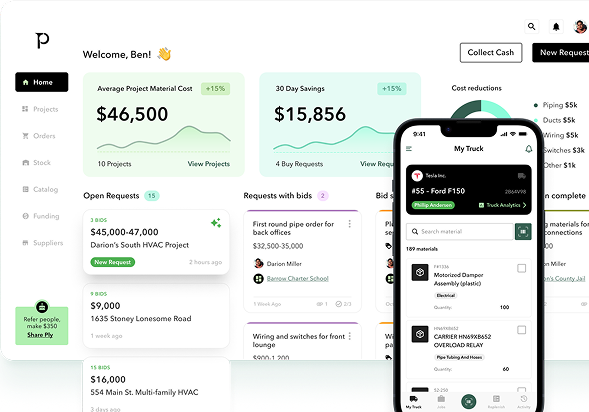
Ply

Managing and buying materials

Ply streamlines material procurement for MEP contractors with cost savings, payments, and supplier requests. Integrated with third-party fintech APIs like Plaid, Railz, Lendflow, and Stripe.

Fintech MVP Development Mobile Web SaaS MVP Development
Featured Cases

Why healthcare organisations choose Dotcode for EMR integration

Built around your actual configuration

Built around your actual configuration

EMR integration built around your actual EMR version, data model, and clinical workflow – not a generic connector that requires you to adapt your workflow to the tool. Discovery comes first; code comes second.

HIPAA, GDPR, and HL7/FHIR compliance from the first API call

HIPAA, GDPR, and HL7/FHIR compliance from the first API call

Audit logging, BAA signing, and PHI controls are standard deliverables – not negotiable extras. GDPR controls included for EU markets. The compliance documentation is an output of the engagement, not something you assemble afterward.

Post-payment model

Post-payment model

You pay for working, tested, production-ready integration. No upfront financial commitment before a line of tested code is delivered.

100% code and data ownership

100% code and data ownership

No platform dependency, no licensing cost after delivery. The integration layer goes into your infrastructure – it belongs to you.

Full-cycle, one team

Full-cycle, one team

Discovery, architecture, sandbox development, compliance review, go-live, post-launch monitoring – one team throughout the engagement. See our full custom software development approach for how we structure longer engagements.

Frequently Asked Questions

EMR integration services connect your healthcare application to an electronic medical record system – enabling bi-directional data flow of patient records, lab results, medications, and clinical notes. Depending on the EMR, this means FHIR R4 API development, SMART on FHIR apps, HL7 v2 interface engine work, or custom bridging for legacy systems. Start here.

Epic, Cerner (Oracle Health), Allscripts, Athenahealth, Meditech, eClinicalWorks, and custom HL7 v2/v3 or FHIR R4 implementations. For legacy systems without modern APIs, we build HL7 interface engine connections. The goal in every case: zero manual data transfer between systems – that’s what EMR system integration should deliver.

A focused EMR integration – one application to one EMR with defined data flows – typically takes 8–14 weeks. A multi-EMR integration layer is closer to 4–6 months. Timeline is defined in discovery before any commitment. Get a rough estimate.

Yes. Every integration we build handles PHI under HIPAA controls – encrypted data in transit and at rest, role-based access, audit logging, and BAA signing before development begins. Penetration testing of the integration layer is included as standard. GDPR controls are added for EU market deployments. HIPAA compliant EMR integration is the only kind we build.

SMART on FHIR is the standard for building applications that launch inside Epic, Cerner, and other FHIR-enabled EMRs – contextual, single sign-on, operating on live patient data. We build SMART on FHIR apps and handle the Epic App Orchard and Cerner App Market certification process as part of the engagement.

Yes – this is one of the most common EMR integration scenarios we handle. Patient portal integration pulls records, results, and appointments from the EMR. Telehealth integration pushes visit documentation back after the encounter. Both flows bi-directional, no manual re-entry required. See our telehealth work. For digital health startups, see also our MVP services.

EMR (Electronic Medical Record) typically refers to a single practice’s digital patient records. EHR (Electronic Health Record) covers a broader patient history across providers and care settings. In integration work, the technical approach – HL7, FHIR, SMART on FHIR – is the same regardless of which term the vendor uses. EMR EHR integration services from Dotcode cover both, built to the same compliance and architectural standards.

Ready to eliminate manual data transfer between your EMR and every connected system?

Tell us what systems you’re running, what’s not connecting, and what the correct data flow should look like. We’ll audit the integration landscape, scope the compliance requirements, and show you what a working integration looks like on a defined timeline.