


EHR Integration
Services

Clinical staff should not be copying patient data between tabs. EHR integration done properly means your systems talk to each other – the right data reaches the right clinician at the right moment, without a manual transfer step in between. That is the outcome electronic health record integration services should deliver: not connectivity for its own sake, but zero re-entry and zero information gaps in the clinical workflow.

Dotcode builds ehr integration services for hospitals, digital health companies, specialty clinics, and telehealth platforms. Our integration to ehr work covers bi-directional data sync, FHIR R4 API development, HL7 interface engines, and SMART on FHIR applications – all built on HIPAA-compliant infrastructure with BAA coverage from day one.

Why EHR Integration Is Hard to Get Right

Most organizations that come to us have already tried something. A middleware connector, an iPaaS platform, an internal build that got as far as sandbox and stopped. Four problems show up every time:
Manual re-entry is not just inefficient - it is a patient safety issue

Clinical staff copying patient data between EHR, billing, scheduling, and portal systems are not just wasting time. Every manual transfer is an opportunity to introduce a transcription error into the medical record. At scale, this is not a workflow inefficiency. It is a clinical risk that compounds across thousands of patient touchpoints.

EHR APIs are not plug-and-play

Epic, Cerner, and legacy systems each have different API models, authentication flows, data formats, and version histories. An integration that passes sandbox testing with synthetic data can behave completely differently in a production environment with real patient records and real clinical edge cases. Generic connectors are built for the median use case.

Compliance gaps in the integration layer are liability exposure

Every connection that touches PHI requires HIPAA audit logging, BAA coverage, and documented data handling procedures. An integration to EHR systems that passes functional testing but skips the compliance layer is not a working integration – it is a risk that has not been discovered yet. One gap in the audit trail is enough to fail an OCR review.

Generic middleware has version and workflow limitations

Mirth Connect, Rhapsody, and generic iPaaS platforms handle common message types and standard configurations. What they do not handle: your specific HL7 message profile, your EHR’s non-standard extensions, your clinical workflow’s data transformation requirements.

EHR Integration Services We Provide

Our ehr integration services cover the full range of what electronic health record integration services actually require in a production healthcare environment:

01
Bi-directional EHR Data Sync

Real-time, two-way synchronization between your EHR and connected systems – scheduling, billing, patient portal, analytics, or third-party applications. Data flows in both directions without manual intervention. Conflict resolution logic and error handling are part of the architecture, not added after the first production failure.

Real-Time Sync
02
SMART on FHIR App Development

Applications that launch inside the EHR workflow and surface contextual patient data without requiring the clinician to leave their current system. SMART on FHIR apps are authorized through the EHR’s own OAuth flow, reducing the authentication burden. We handle the App Orchard submission process for Epic and the equivalent review processes for other major EHRs.

OAuth Authorization
03
HL7 Interface Engine Development

Custom interface engines for HL7 v2 and v3 message processing – ADT, ORU, ORM, SIU, and other message types specific to your clinical environment. We build on Mirth Connect, Rhapsody, or custom Node.js/Python engines depending on your infrastructure requirements and volume. Integration of ehr systems via HL7 is still the dominant pattern in hospital environments and is not going away.

Custom Interface Engines
04
FHIR API Integration

FHIR R4 API development, FHIR resource mapping, and custom FHIR server implementations. Whether you are connecting to an EHR’s native FHIR endpoint or building a FHIR facade over a legacy system, we design the resource model against your actual data requirements – not against what a generic FHIR template assumes you need.

Legacy System Bridge
05
Patient Identity Matching (MPI)

Master Patient Index integration and probabilistic matching algorithms that accurately link patient records across systems with different identifier schemes. In multi-EHR environments and hospital networks where the same patient appears under different IDs, MPI is what prevents duplicate records and data fragmentation from undermining the integration layer.

MPI Integration
06
CDS Hooks & Clinical Decision Support

CDS Hooks integrations that surface alerts, recommendations, and contextual data at specific points in the clinical workflow – during order entry, at patient check-in, during medication review. The integration connects your decision support logic to the EHR without disrupting the clinician’s flow. See our full healthcare software services for context on how CDS fits into a broader platform.

Decision Support

Electronic Health Record Integration – Solution Types

The architecture for electronic health record ehr software integration varies significantly by context. Each solution type below has a distinct technical profile and compliance footprint:

Hospital EHR Integration
Electronic Health Record Software Integration
SMART on FHIR Application Integration
Legacy HL7 v2 to FHIR Migration
Multi-EHR Integration Layer
Telehealth & Remote Monitoring EHR Integration

Who We Work With

Hospitals & Health Systems

Hospitals & Health Systems

Multi-department, multi-site environments where the integration layer connects dozens of clinical and administrative systems. The complexity here is not just technical – it is organizational. We work with clinical informatics teams, IT departments, and vendor contacts simultaneously to get integrations specified, tested, and approved through the channels each EHR vendor requires.

Digital Health Companies & Startups

Digital Health Companies & Startups

Companies building products that need to connect to a customer’s EHR from day one. SMART on FHIR certification, App Orchard submission, and EHR vendor review processes are part of the delivery scope. Startups need integrations that pass enterprise procurement reviews, not just functional tests in a sandbox.

Medical Practices & Specialty Clinics

Medical Practices & Specialty Clinics

Single and multi-location practices where the EHR is the operational center and everything else needs to connect to it. Billing integration, patient portal sync, scheduling automation, and lab result routing are the most common starting points. The goal: staff time spent on clinical work, not on bridging system gaps manually.

Telehealth & Remote Monitoring Platforms

Telehealth & Remote Monitoring Platforms

Platforms where the encounter happens outside the traditional clinical setting but the documentation needs to land in the patient’s EHR. Visit summaries, device data, and care plan updates need to flow into the right FHIR resources or HL7 message types without requiring provider staff to manually enter the data after the fact.

Health IT Vendors & Platform Companies

Health IT Vendors & Platform Companies

Companies that build software for healthcare and need to offer EHR integration as a core capability, not a custom services engagement for every customer. We build integration layers that can be configured per customer without a new development effort each time, and we work through the certification processes that enterprise health systems require before connecting to their EHR.

Custom EHR Integration vs Middleware Platforms

The ehr integration decision is not just technical. It is a question of how much workflow flexibility, compliance ownership, and long-term maintainability you need. The table below compares middleware/iPaaS platforms with a custom build:

Fits your data model
Middleware / iPaaS (Mirth Connect, Rhapsody, generic iPaaS)

Partial – standard message types handled; non-standard fields require workarounds

Custom by Dotcode

Yes – data model and transformation logic built for your specific EHR configuration

EHR version compatibility
Middleware / iPaaS (Mirth Connect, Rhapsody, generic iPaaS)

Vendor-supported versions only; updates may break existing interfaces

Custom by Dotcode

Built and tested against your EHR version; upgrade paths planned during architecture

HIPAA & audit compliance
Middleware / iPaaS (Mirth Connect, Rhapsody, generic iPaaS)

Platform provides infrastructure; your configuration layer carries compliance responsibility

Custom by Dotcode

Audit logging, BAA documentation, and PHI controls built into the integration as standard deliverables

Performance at volume
Middleware / iPaaS (Mirth Connect, Rhapsody, generic iPaaS)

Platform-level throttling; high-volume message processing may require expensive tier upgrades

Custom by Dotcode

Architecture sized for your message volume; Redis queuing and horizontal scaling built in where needed

Code & data ownership
Middleware / iPaaS (Mirth Connect, Rhapsody, generic iPaaS)

Platform-owned; vendor lock-in on integration logic and monitoring

Custom by Dotcode

100% yours from day one – full source code, integration configuration, and audit logs

Custom workflow logic
Middleware / iPaaS (Mirth Connect, Rhapsody, generic iPaaS)

Limited to platform’s transformation capabilities; complex logic requires scripting workarounds

Custom by Dotcode

Any transformation logic the clinical workflow requires, built and tested as part of the integration

Running on disconnected EHR systems with manual data transfer between them?

Let's build an integration that removes the gap.

Book a call →
line on background
square on background

Development Process

Every ehr integration services engagement follows six stages. None are optional – each one is a prerequisite for the next, and skipping any of them is how integration projects end up broken in production.

Get in touch and let's talk through the finer details
1
Discovery & System Audit

Mapping the existing EHR, interface engine, and connected systems. API availability, HL7 message types, authentication configuration, and data model are documented before scoping begins. In electronic health record integration services work, surprises in production almost always originate from things that were not documented during discovery. We do not skip this step.

2
Integration Architecture

Data flow design, authentication model, error handling, and monitoring strategy are defined before any code is written. FHIR resource mapping and HL7 message transformation logic are reviewed with your clinical informatics team. What we agree on in architecture is what gets built – scope changes that emerge from undocumented requirements after this stage are the most expensive kind.

3
Sandbox Development

All development happens in EHR sandbox environments with synthetic data. Epic, Cerner, and most major systems provide dedicated developer sandboxes. We use them throughout the build – not just for initial testing but for every significant change. An integration that has only ever run against synthetic data is not ready for production. We know what production data looks like before go-live because we have already hit the edge cases in sandbox.

4
Integration Testing & Validation

End-to-end testing with clinical scenarios, edge cases, and failure modes – not just the happy path. HL7 message validation, FHIR conformance testing, and security review before any production connection is established. This phase is where integration of ehr systems either proves out or surfaces the gaps that would have caused production incidents.

5
Compliance Review

HIPAA audit log verification, PHI handling review, and BAA documentation finalized before go-live. Penetration testing of the integration layer is included as a standard deliverable. The compliance documentation produced here is what your organization needs for audit trail purposes – it is not a retrospective exercise but a planned deliverable. See our software services overview for the full compliance scope.

6
Go-Live & Monitoring

Production deployment with a rollback plan and real-time monitoring of message throughput, error rates, and sync lag. We stay after launch until the integration is stable under production conditions. The first weeks of a production ehr integration reveal message patterns and edge cases that synthetic testing does not. Monitoring infrastructure is set up before go-live, not after the first incident. Get a project estimate →

Tech Stack

The stack for ehr integration work is selected during the architecture phase against your EHR version, message volume, and compliance requirements. Below is the full capability set for electronic health record ehr software integration at Dotcode:

Looking for a specific tech stack?

Let’s talk!

Nazar Solovei
Nazar Solovei Business Development Manager
Let’s talk
HL7 / FHIR
HL7 / FHIR

HL7 v2 (MLLP), HL7 FHIR R4, SMART on FHIR, CDS Hooks

EHR APIs
EHR APIs

Epic App Orchard, Cerner FHIR API, Allscripts API, Athenahealth API, eClinicalWorks API, Meditech

Interface Engines
Interface Engines

Mirth Connect, Rhapsody, Custom Node.js / Python engines

Backend
Backend

Node.js, Python, Java, .NET

Cloud
Cloud

AWS (HIPAA-eligible), Azure Healthcare APIs, Google Cloud Healthcare API

Security
Security

HashiCorp Vault, AWS KMS, OAuth 2.0 / OpenID Connect, TLS 1.3

Monitoring
Monitoring

Datadog, AWS CloudWatch, Custom HL7 audit dashboards

Databases
Databases

PostgreSQL, MongoDB, Redis (message queue)

Looking for a specific tech stack?

Let’s talk!

Nazar Solovei
Nazar Solovei Business Development Manager
Featured Cases

Custom Software Solutions

All cases

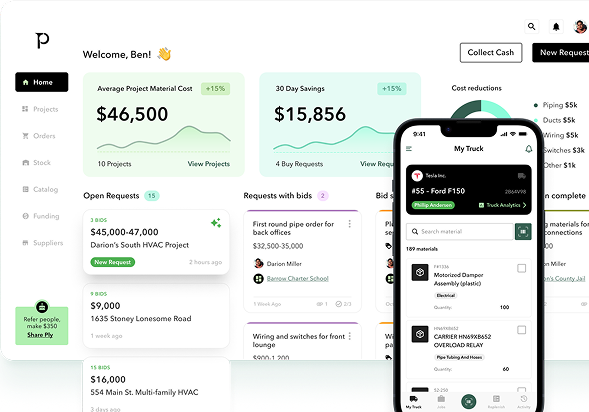
Ply

Managing and buying materials

Ply streamlines material procurement for MEP contractors with cost savings, payments, and supplier requests. Integrated with third-party fintech APIs like Plaid, Railz, Lendflow, and Stripe.

Fintech MVP Development Mobile Web SaaS MVP Development
Featured Cases

Why Businesses Choose Dotcode

Integration built around your actual EHR configuration.

Integration built around your actual EHR configuration.

Not a generic connector that requires you to adapt your clinical workflow to the tool’s limitations. EHR integration that starts from your specific system version, message profile, and data model – because that is what determines whether it works in production.

Compliance built in from the first API call.

Compliance built in from the first API call.

HIPAA, GDPR, and HL7/FHIR compliance requirements are part of the architecture, not added before an audit. Audit logging, BAA coverage, and PHI controls are standard deliverables, not optional add-ons.

Post-payment model.

Post-payment model.

No upfront financial risk. You pay for a working, tested, production-ready integration. The commercial model matches the delivery model.

Full code and data ownership from day one.

Full code and data ownership from day one.

No platform dependency. No licensing cost after delivery. The full source code, integration configuration, and audit logs are yours. Among reliable ehr integration services companies, that is not universal – we make it standard.

One team, full cycle.

One team, full cycle.

Discovery, architecture, sandbox development, compliance review, go-live, and post-launch monitoring handled by one team with continuous context. No handoffs between agencies, no context lost between stages, no gap between launch and support.

Frequently Asked Questions

EHR integration services cover the full process of connecting an electronic health record system to other clinical or administrative platforms. This includes bi-directional data synchronization, FHIR R4 API development, HL7 interface engine development, SMART on FHIR application integration, patient identity matching, and compliance documentation. The scope for any given engagement depends on which EHR systems are involved, what data needs to flow between them, and what compliance requirements govern the connection.

An electronic health record is a digital system for storing and managing patient clinical data – diagnoses, medications, lab results, visit notes, and care history. Electronic health record ehr software integration matters because most healthcare organizations run more than one system, and the EHR rarely talks to all of them by default. Without integration, clinical data is siloed, staff manually transfer information between systems, and the risk of errors in that transfer accumulates. Integration removes the manual step and makes data available where it is needed when it is needed.

We provide ehr integration for Epic via App Orchard and SMART on FHIR, Cerner via FHIR R4 API, Allscripts, Athenahealth, eClinicalWorks, and Meditech. For legacy systems using HL7 v2 interfaces, we build custom interface engines. Hospital ehr integration often involves multiple systems simultaneously – we map the full integration scope during discovery and select the appropriate API approach for each system. Integration of ehr systems that are not on this list is possible if documentation and sandbox access are available from the vendor.

SMART on FHIR is a standard for applications that launch inside an EHR workflow and access patient data through the EHR’s FHIR API. It uses OAuth 2.0 for authorization, so the clinician does not need a separate login for the external application. This electronic health record solution pattern is how third-party tools – clinical decision support, prior authorization automation, remote monitoring dashboards – are embedded in the EHR interface without requiring a custom integration for each EHR implementation. We handle the App Orchard submission process for Epic and the equivalent certification processes for other major EHRs.

A focused ehr integration between two systems with documented APIs and a defined data scope typically takes 8–16 weeks from discovery to go-live. Complex hospital integrations involving multiple EHR systems, legacy HL7 interfaces, and compliance documentation run 16–30 weeks. The timeline is driven more by EHR vendor sandbox access, clinical informatics review cycles, and the complexity of the data transformation logic than by the development work itself. These are electronic health record software solutions timelines based on production delivery, not sandbox completion.

HIPAA compliance in an ehr integration services context means three things: every connection touching PHI has audit logging, PHI is encrypted in transit and at rest, and BAA agreements cover all system components that process protected health information. Among reliable ehr integration services companies, these should be standard deliverables. At Dotcode, audit logging, encryption architecture, and BAA documentation are part of every integration we deliver – not optional additions. Penetration testing of the integration layer is included by default.

Most electronic health record software companies offering integration deliver a configured middleware platform or a generic FHIR connector. What they do not deliver: an integration built around your specific EHR version, your HL7 message profile, your data model, and your compliance requirements. Ehr integration services at Dotcode start from discovery of your actual configuration – the systems you have, the data flows you need, and the compliance obligations you are under. The result is an integration that works in your production environment, not in a standardized test case.

Still manually transferring data between your EHR and other systems?

Let’s build an integration that removes the gap – bi-directional,
HIPAA-compliant, and built around how your systems actually work.