


Telemedicine App Development
Solutions

Most healthcare organisations trying to run virtual care on generic video tools run into the same three problems: no HIPAA coverage, no connection to the EHR, and clinicians re-entering the same data twice after every visit. Custom telemedicine app development solves all three. We build telehealth platforms that plug directly into your existing clinical infrastructure – Epic, Cerner, HL7/FHIR, or whatever you’re running – and are designed around how your care team actually works. If you’re looking for a custom software development partner that understands both the compliance layer and the clinical reality, this is where to start.

From first discovery call through post-launch support, every telemedicine application development engagement at Dotcode produces code you own outright and a platform your clinical team will actually use.

Why generic video tools don't work for clinical workflows

The gap between a consumer video call and a functional telehealth platform is wider than it looks from the outside. Here's where generic tools fail healthcare organisations at every level.
Generic video tools aren't HIPAA-compliant

Zoom and Teams handle calls – not healthcare. PHI in chat logs, recordings, or shared screens creates compliance liability the platform agreement doesn’t cover. The BAA exists on paper; the architecture doesn’t support it.

No EHR connection
No EHR connection

Clinicians take notes during the call and manually re-enter everything into the EHR afterward. Double documentation adds 20–40 minutes per appointment. Across a busy practice, the administrative cost of running telehealth on generic tools exceeds the clinical benefit.

Patient experience breaks down

Patients navigate separate login portals with no connection to their care history, receive unclear instructions, and can’t see their own records. Drop-off before the visit starts – and no-shows after scheduling – increase when the patient-facing experience has no continuity.

Reimbursement workflows are missing

Telehealth billing codes, consent forms, and state-specific compliance requirements aren’t built into generic tools. Clinical and administrative staff manage them manually – which introduces errors, delays, and billing compliance exposure at every appointment.

line on background
square on background
What services we deliver

Telemedicine app development services we deliver

Each telemedicine app development service below is available as a standalone engagement or as part of a full-platform build. Scope is defined in discovery – before any code is written. See our full software development services for context on how healthcare projects fit into our broader practice.

Discuss the details with our team
Custom Telemedicine Platform Development

Full-cycle telemedicine app development from architecture through production. We cover the full stack – frontend, backend, video infrastructure, compliance controls, and third-party integrations – for healthcare providers, hospital systems, and digital health companies. Tech stack and architecture are defined around your care model and regulatory context, not a pre-built template.

Video Consultation Module

HIPAA-compliant video infrastructure with secure in-session chat, file sharing with PHI controls, and asynchronous messaging for follow-up. Supports synchronous real-time visits and store-and-forward workflows for dermatology, radiology, and specialty care. All video infrastructure is BAA-covered from day one.

Patient Portal Integration

Patient-facing interface with access to visit records, lab results, care team messaging, appointment scheduling, and prescription history – designed for varying levels of digital literacy, not just early adopters. Integrates with the same EHR your clinical team uses. When done right, it reduces inbound call volume noticeably.

EHR Integration
EHR Integration

Bi-directional data sync with Epic (SMART on FHIR), Cerner, Allscripts, Athenahealth, and custom HL7 v2/v3 or FHIR R4 implementations. Visit documentation, diagnoses, and orders return to the EHR after every telehealth encounter automatically – no manual re-entry, no record inconsistencies.

Remote Patient Monitoring (RPM)

IoT device data ingestion from wearables, glucometers, blood pressure monitors, and other home devices. Threshold-based alerting, care team notifications, and longitudinal dashboards. Built for chronic disease management and post-acute programs where in-person visits aren’t always practical.

Telehealth Mobile App Development

iOS and Android apps for patients and clinicians – built with React Native for shared codebase efficiency, or Swift/Kotlin where platform-specific performance requirements justify the separate build. Every mobile app carries the same HIPAA controls, PHI encryption, and audit logging as the web platform.

What We Build

Types of telemedicine solutions we build

Telemedicine software development covers a range of delivery models. The right architecture depends on your care model, patient population, and what already exists in your infrastructure.

Synchronous Telehealth Platform

Synchronous Telehealth Platform

Real-time video visits with secure chat, consent capture, and post-visit documentation pushed directly to the EHR. Scheduling integrated with your existing system.

Business result
Full visit cycle within the platform. Zero manual re-entry. Documentation in the EHR before the clinician closes the browser.

Asynchronous Telehealth (Store-and-Forward)

Asynchronous Telehealth (Store-and-Forward)

Patient submits symptoms, images, or questionnaires; clinician reviews and responds asynchronously. Common in dermatology, radiology, and chronic condition follow-up.

Business result
Extends care access without adding real-time scheduling pressure. Clinicians review on a schedule that fits their workflow.

Remote Patient Monitoring Platform

Remote Patient Monitoring Platform

Continuous data from wearables and home devices, threshold alerts, longitudinal dashboards, and automated escalation workflows.

Business result
Early intervention for high-risk patients reduces emergency visits without requiring in-person appointments.

Telehealth + EHR Combined Platform

Telehealth + EHR Combined Platform

Telemedicine built on existing EMR infrastructure – full bi-directional sync, single sign-on for clinical staff, unified scheduling. Requires careful integration architecture. Telemedicine platform development at this level is what we do for larger health systems.

Business result
Eliminates dual documentation and keeps clinical data consistent across every system that touches the patient record.

Telehealth Mobile App (Patient-Facing)

Telehealth Mobile App (Patient-Facing)

iOS and Android covering booking, video visits, messaging, prescription requests, and care plan access in one interface. Built for patients with limited technical confidence.

Business result
Patient engagement improves. No-show rates fall when patients can manage their care from a single app

White-Label Telehealth Platform

White-Label Telehealth Platform

Branded telehealth infrastructure for payers, health systems, or digital health companies that need to offer telemedicine under their own name.

Business result
Faster time-to-market than building from scratch – without platform dependency or vendor lock-in.

Healthcare organisations we build telemedicine software for

Hospitals & Health Systems

Telehealth programs integrated into existing clinical workflows, EHR systems, and scheduling infrastructure. Telemedicine app development at this scale requires HIPAA compliance, enterprise security review, and change management support – all three handled as part of the engagement.

Clinics & Medical Practices

Quick-to-deploy telehealth solution that connects to your existing patient records and billing system without an IT department to manage it. Built for a busy practice – not for a generic SaaS model that assumes six months of configuration time.

Telehealth & Digital Health Startups

Telehealth & Digital Health Startups
HIPAA-compliant telehealth MVP in 8–12 weeks, structured around product-market fit validation before full build commitment. Our MVP-first approach means you test the core clinical hypothesis with real users before scaling. Custom telemedicine app development for startups that need speed without compliance shortcuts.

Payers & Insurance Platforms

Member-facing telehealth portals integrated with claims processing, eligibility verification, and care management platforms. Built for reimbursable workflows and the consent/documentation requirements of payer-funded virtual care.

Specialty Care Providers

Mental health, dermatology, chronic disease management, and specialty telehealth platforms built for the specific documentation requirements, consent workflows, and clinical protocols of each specialty. A generic telehealth platform doesn’t know what a dermatology intake form looks like – custom builds do.

CUSTOM VS OFF-THE-SHELF

Custom telemedicine app development vs off-the-shelf platforms

Doxy.me, Zoom for Healthcare, and white-label Teladoc solutions cover a lot of ground – right up to where your clinical workflow hits the platform’s limits. That’s the line we build past.

Fits your clinical workflow
Generic off-the-shelf

You adapt to what the platform allows

Custom by Dotcode

Built around how your care team works

EHR & system integrations
Generic off-the-shelf

Limited to pre-built connectors

Custom by Dotcode

Epic, Cerner, any HL7/FHIR system

HIPAA / state compliance
Generic off-the-shelf

Platform compliance, not your implementation

Custom by Dotcode

Configured for your regulatory context

Billing & reimbursement workflows
Generic off-the-shelf

Generic – not built for your payer mix

Custom by Dotcode

State-specific codes and consent built in

Code & data ownership
Generic off-the-shelf

Vendor lock-in, no export

Custom by Dotcode

100% yours from day one

Specialty-specific feature
Generic off-the-shelf

One-size-fits-all

Custom by Dotcode

Built for your care model and patient population

Using a generic video tool that wasn't built for clinical workflows?

Let's build something that actually fits.

Book a call →
line on background
square on background

How we build telemedicine apps

Every custom telemedicine app development engagement follows the same six-step process. The order isn’t arbitrary – each phase produces a concrete output the next phase builds on.

Get in touch and let's talk
1
Discovery & Requirements

Clinical workflow mapping, existing system documentation, compliance scoping, and patient population analysis. Scope and data model are fixed here – surprises in sprint three trace back to requirements not defined in week one.

2
UX/UI Design

Wireframes and clickable prototypes tested with clinical staff before a line of code is written. Telehealth UX has specific constraints: a patient on a slow connection and a clinician with eight minutes between appointments have very different tolerances for friction.

3
Architecture & Tech Stack

Stack selection driven by compliance requirements, video infrastructure needs, and integration complexity. HIPAA controls go into the data model from the first line of architecture – not as a configuration layer added before launch.

4
Agile Development

Two-week sprints with a working demo after each one. Clinical stakeholders review every iteration before it merges. This is how workflow mismatches get caught at sprint level, not after a full build.

5
QA & Compliance Testing

Functional, security, and penetration testing – with particular depth on PHI-handling modules. BAA signing and compliance documentation are deliverables, not afterthoughts. The audit trail is ready before go-live.

6
Launch & Post-Launch Support

Deployment, clinical staff training, and structured post-launch iteration. We stay after go-live. Get a project estimate.

Technology stack for telemedicine app development

The stack behind every custom telemedicine application is chosen for compliance coverage and integration depth. For full details on our web infrastructure capabilities, see web development services.

Need help selecting the right stack?

Discuss Your Project with Us

Nazar Solovei
Nazar Solovei Business Development Manager
Let’s talk
Mobile
Mobile

React Native, Flutter, Swift, Kotlin

Frontend
Frontend

React, Next.js, Vue.js, Angular

Backend
Backend

Node.js, Python, Java, .NET

Cloud
Cloud

AWS (HIPAA-eligible), Google Cloud Healthcare API, Azure Healthcare APIs

Video Infrastructure

Twilio Video, Daily.co, Agora, AWS Chime

EHR / HL7 / FHIR
EHR / HL7 / FHIR

Epic SMART on FHIR, Cerner FHIR R4, Allscripts, Custom HL7 v2/v3

Databases
Databases

PostgreSQL, MongoDB, Redis, MySQL

Compliance & Security

AWS HIPAA, HashiCorp Vault, OAuth 2.0, TLS 1.3, BAA-ready infra

Need help selecting the right stack?

Discuss Your Project with Us

Nazar Solovei
Nazar Solovei Business Development Manager
Featured Cases

Custom Software Solutions

All cases

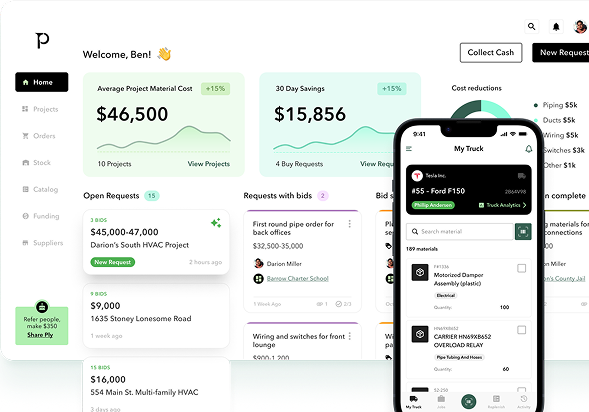
Ply

Managing and buying materials

Ply streamlines material procurement for MEP contractors with cost savings, payments, and supplier requests. Integrated with third-party fintech APIs like Plaid, Railz, Lendflow, and Stripe.

Fintech MVP Development Mobile Web SaaS MVP Development
Featured Cases

Why healthcare teams choose Dotcode for telemedicine app development

Built around your clinical workflow

Telemedicine app development starts with your clinical workflow – the actual sequence from patient scheduling to post-visit documentation. We build around how your team works, not around what a vendor decided to ship.

HIPAA compliance from architecture, not configuration

PHI encryption, role-based access, audit logging, and penetration testing are standard deliverables on every engagement. BAA signing included. Compliance documentation is something you can put in front of a reviewer.

Post-payment model
Post-payment model

No upfront financial risk. You pay for delivered, tested, working software – scope and timeline are defined and agreed before payment begins.

100% code and data ownership

The codebase goes into your GitHub. No vendor lock-in, no licensing dependency after delivery. You own what we build, full stop.

Full-cycle, one team

Discovery, UX, development, QA, compliance review, launch, post-launch support – one team from first call to production. No handoffs between agencies, no translation loss between designers and developers. See our full software development services overview for how we structure engagements.

Telemedicine app development: frequently asked questions

Custom telemedicine app development covers video consultation infrastructure, patient portal, EHR integration, RPM, scheduling, consent management, and billing workflows. Exact scope depends on your care model, existing systems, and compliance requirements – discovery defines it before any development begins.

A focused telehealth MVP – video visits, patient intake, and EHR integration – typically reaches a working version in 8–12 weeks. A full platform covering remote patient monitoring, specialty workflows, and multi-EHR sync runs closer to 4–6 months. Timeline is scoped and fixed in discovery before any commitment.

Yes. HIPAA compliance is an architecture decision, not a configuration layer. Encrypted PHI, role-based access, audit logging, and BAA signing are standard deliverables on every engagement. State-specific telehealth regulations are addressed in discovery. Compliance documentation – auditor-ready – is a deliverable, not a byproduct.

Yes. We integrate with Epic (SMART on FHIR), Cerner, Allscripts, Athenahealth, and custom HL7 v2/v3 or FHIR R4 implementations. For legacy systems without modern APIs, we build HL7 interface engine connections. Bi-directional sync means post-visit documentation flows back into the EHR automatically – no manual re-entry.

Yes – iOS and Android patient apps and clinician apps. React Native for shared codebase efficiency; Swift and Kotlin where platform-specific performance justifies separate builds. Every mobile app carries the same HIPAA controls, PHI encryption, and audit logging as the web platform.

Yes. For digital health startups, we structure development around rapid clinical validation – a HIPAA-compliant telehealth MVP in 8–12 weeks that tests the core hypothesis before committing to a full build. This isn’t a reduced-quality version; it’s a correctly scoped one. See our MVP services.

We start with your clinical workflow and compliance requirements, not with a component library. Every technical decision follows from that. You own the code from day one, stored in your own repository. We stay after launch – iterating and supporting the product as your clinical needs evolve. See what we’ve built.

Ready to build a telemedicine platform that fits how your clinical team actually works?

Tell us what you’re running, what’s broken, and what good looks like for your patient population – we’ll scope the compliance requirements, define the integration landscape, and show you what a working version looks like in 6–12 weeks.