Insurance Software Development
Company

Insurers, MGAs, and brokers use custom insurance software development to automate underwriting, claims, and policy management in one platform – instead of manual processes spread across disconnected legacy systems.

Why Insurers Need Custom Software

Most insurance operations aren't held back by a lack of tools. They're held back by tools that don't talk to each other.
Legacy policy administration systems

Outdated PAS platforms can’t keep up with new products and force teams into manual workarounds for every exception.

Manual underwriting slows quote-to-bind

Underwriters check risk factors by hand, stretching a same-day quote into a multi-day wait.

Claims processing bottlenecks

Paper- and email-based claims workflows leave policyholders with no real-time visibility into their claim status.

Disconnected data across systems

Policy, claims, billing, and CRM live in separate databases with no single source of truth, so every team works from a slightly different version of the truth.

Our Services

Insurance Software Development Services

Dotcode builds insurance software development services around how your underwriting and claims teams actually work – not around what a pre-built platform happens to support.

01
Custom Insurance Software Development

A fully custom solution for your product line: P&C, life, health, or commercial insurance. Custom insurance software development means rating logic, underwriting rules, and claims workflows are designed around your existing processes, not squeezed into a generic platform’s limitations.

Tailored Risk Logic
02
Policy Administration Systems (PAS)

Full-cycle policy management: quoting, binding, endorsements, renewals, and cancellations, integrated with your rating engine and billing system.

Full Lifecycle
03
Claims Management Software

FNOL automation, claims triage, adjuster assignment, and real-time status tracking that policyholders can actually see.

Automated FNOL
04
Underwriting Automation

Rules-based and ML-driven risk scoring, automatic data enrichment from third-party sources, and a shorter path from quote to bind.

Faster Quote-to-Bind
05
Insurance CRM & Agent Portals

Centralized portals where agents and brokers manage quotes, policies, and commissions without switching between five tabs.

Unified Agent View
06
InsurTech & API Integrations

Connections to rating engines like Duck Creek and Guidewire, payment processors, and third-party data sources – motor vehicle records, credit bureaus, IoT devices.

Connected Ecosystem
07
Insurance Data & Fraud Detection

Analytics on claims patterns that flag anomalies automatically, before a payout goes out the door.

Fraud Prevention
Key Capabilities

Core Features of Insurance Software

An insurance software development company worth hiring builds these six capabilities in from the start, not as a phase-two add-on.

1

Real-Time Quoting & Rating Engine

Pulls live rating factors instead of cached tables.

Business result: quotes that reflect current risk pricing, not last quarter’s.

2

Automated Underwriting Workflows

Routes straightforward risks through automated approval and flags exceptions for human review.

Business result: underwriters spend time on the cases that actually need judgment.

3

Claims Intake & FNOL Automation

First notice of loss captured digitally, with automatic routing to the right adjuster.

Business result: claims cycle time drops measurably.

4

Policyholder Self-Service Portal

Policyholders check status, upload documents, and file claims without calling in.

Business result: fewer inbound support calls, higher satisfaction scores.

5

Commission & Billing Management

Automated commission calculation and billing reconciliation across agents and MGAs.

Business result: fewer manual reconciliation errors at month-end.

6

Compliance & Audit-Ready Reporting

Built-in reporting that maps directly to regulatory requirements.

Business result: audit prep goes from weeks to days.

line on background
square on background
Target Segments

Who We Work With

From a single-line MGA writing its first book of business to a multi-state carrier managing thousands of policies – the development model adapts to where you are.

1
P&C Insurance Carriers

Policy administration and claims systems built to handle volume without slowing down.

2
Health Insurance Providers

Health insurance software development with HIPAA compliance built into the architecture, not bolted on afterward.

3
MGAs & Insurance Agencies

Underwriting authority and binding workflows that match your specific product appetite.

4
Insurance Brokers

Agent-facing tools that centralize quoting and policy management across multiple carriers.

5
InsurTech Startups

Full-stack platforms built for speed-to-market without cutting corners on compliance.

6
Reinsurance Companies

Data aggregation and reporting systems built for treaty-level complexity.

CUSTOM VS OFF-THE-SHELF

Custom Insurance Software vs Off-the-Shelf Platforms

Custom insurance software development is what you need when a platform stops fitting your risk logic and starts dictating it. Off-the-shelf tools work fine until your product, your underwriting rules, or your compliance requirements don’t match the template – and that’s usually exactly when it matters most.

Fits your underwriting rules
Generic off-the-shelf (Salesforce Insurance Cloud, Applied Epic)

Adapt your process to the product

Custom by Dotcode

Built around your exact risk logic

Rating engine flexibility
Generic off-the-shelf (Salesforce Insurance Cloud, Applied Epic)

Limited, vendor-controlled

Custom by Dotcode

Fully customizable

Claims workflow
Generic off-the-shelf (Salesforce Insurance Cloud, Applied Epic)

Generic, one-size-fits-all

Custom by Dotcode

Matches your adjuster process

Compliance (NAIC, HIPAA, SOC 2)
Generic off-the-shelf (Salesforce Insurance Cloud, Applied Epic)

Varies by vendor

Custom by Dotcode

Built into architecture

Integration depth
Generic off-the-shelf (Salesforce Insurance Cloud, Applied Epic)

Pre-built connectors only

Custom by Dotcode

Any core system, any data source

Code & data ownership
Generic off-the-shelf (Salesforce Insurance Cloud, Applied Epic)

Vendor-owned

Custom by Dotcode

100% yours from day one

Stuck adapting your workflow to a rigid insurance platform?

Let’s build software that fits your risk logic, not the other way around.

Book a call
How We Work

Development Process

Six steps from first conversation to a system your underwriters and claims team actually use.

1

Discovery & Regulatory Mapping

We map your current workflow and the compliance requirements (NAIC, state-specific rules, HIPAA for health lines) that the architecture needs to satisfy from day one.

2

UX/UI Design for Agents & Policyholders

Separate, purpose-built interfaces for internal teams and policyholders, not one generic dashboard trying to serve both.

3

Architecture & Compliance-Ready Tech Stack

The technical foundation is built to pass a regulatory audit, not just a demo.

4

Agile Development

Two-week sprints with visible progress, so you’re never waiting a quarter to see what’s been built.

5

QA & Compliance Testing

Functional testing plus a dedicated compliance review pass before anything ships.

6

Launch & Post-Launch Support

Go-live support and ongoing maintenance once the system is handling real policies and real claims.

Tech Stack

Insurance software development at Dotcode runs on a stack chosen for compliance and scale, not novelty.

Every one of these insurance software development solutions component choices gets made with your compliance requirements as a constraint, not an afterthought.

Need help selecting the right stack?

Let’s talk!

Nazar Solovei
Nazar Solovei Business Development Manager
Let’s talk
Backend
Backend

Node.js, Python, Java, .NET

Frontend
Frontend

React, Next.js, Angular

Cloud
Cloud

AWS, Google Cloud, Azure

Rating & Core Engines

Duck Creek, Guidewire APIs, custom rating engines

Databases
Databases

PostgreSQL, MongoDB, Redis

Compliance & Security

SOC 2, HIPAA (health lines), OAuth 2.0, TLS 1.3

Need help selecting the right stack?

Let’s talk!

Nazar Solovei
Nazar Solovei Business Development Manager
Case Study

Featured Case Study

All cases

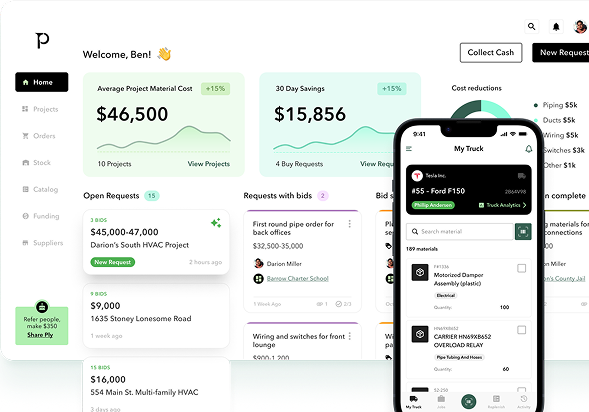
Ply

Materials procurement platform for MEP contractors

Challenge: Ply needed to move cost tracking, payments, and supplier requests off spreadsheets and disconnected tools into one system – while integrating with third-party financial APIs that required careful compliance handling.

Solution: Dotcode built a full-cycle platform integrating Plaid, Railz, Lendflow, and Stripe, with a payments and data-integration architecture designed the same way we approach insurance platforms – compliance and reconciliation logic built in from the start, not patched on.

Result: Contractors track project material costs and process payments through one connected system instead of three disconnected ones.

Fintech Procurement API Integration Web Platform
Case Study
Our Advantages

Why Businesses Choose Dotcode

Tailored Insurance Logic

Insurance software development built around your underwriting and claims logic – not off-the-shelf constraints.

Compliance From Day One

Compliance (NAIC, HIPAA, SOC 2) built into the architecture from day one – not retrofitted before an audit.

Post-Payment Model

Post-payment model – no upfront financial risk. You pay for delivered, tested software.

100% Code & Data Ownership

100% code and data ownership from day one. No vendor lock-in.

Full-Cycle Delivery

Full-cycle delivery: discovery, UX design, development, QA, compliance review, launch, post-launch support.

Frequently Asked Questions

Insurance software development covers policy administration systems, claims management, underwriting automation, agent and broker portals, and the API integrations that connect them to rating engines and third-party data. Scope depends on your product line and existing infrastructure. Insurance software development services at Dotcode start with a discovery phase that defines exactly what needs to be built before any code is written.

At minimum: real-time quoting, automated underwriting workflows, claims intake and tracking, a policyholder self-service portal, and compliance reporting. Insurance product development software built without these from the start usually needs an expensive rebuild within a year or two. An insurance software development company that’s done this before will flag the gaps in your current setup during discovery.

A focused module – a claims portal or an underwriting workflow – typically takes 8–12 weeks to a working version. A full platform covering policy administration, claims, and compliance reporting runs closer to 4–7 months. Custom insurance software development timelines are always scoped during discovery, before any commitment is made. Companies comparing insurance software development companies should ask for a discovery-phase estimate before a fixed quote.

Cost depends on scope – a single module costs meaningfully less than a full policy-to-claim platform. Dotcode scopes cost and timeline during discovery rather than quoting blind. Insurance software development services priced this way tend to avoid the mid-project scope surprises that come with fixed quotes given before requirements are clear. Custom insurance software development services get a rough estimate here.

Yes. We’ve integrated with Duck Creek, Guidewire, and custom rating engines, along with third-party data sources like motor vehicle records and credit bureaus. Insurance software development solutions at Dotcode are built to connect to what you already have, not to force a migration you didn’t ask for. Custom software integration is scoped during the discovery phase alongside the rest of the architecture.

Yes. NAIC requirements are mapped during discovery and built into the architecture from the start. For health insurance lines, HIPAA controls – encryption, access logging, BAA signing – are standard, not optional add-ons. Health insurance software development at Dotcode treats compliance documentation as a deliverable, not an afterthought bolted on before an audit.

Yes. Health insurance software development is one of our core specializations, covering HIPAA-compliant claims processing, member portals, and provider network management. An insurance software development company working across both P&C and health lines brings compliance patterns from one line of business that often strengthen the other.

Tired of underwriting and claims running on disconnected legacy systems?

Let’s build insurance software that fits how your team actually works. Contact us or book a call today.